Ga-67
General
Binds to plasma proteins (basically acute phase reactants) like lactoferrin and transferrin which localize to areas of inflammation
T1/2 = 78 hours
Energy = 93, 185, 288, 394 keV
Better in evaluation of spinal infection than other studies
Emits gamma rays
Uptake in lacrimal glands is how you will know the study is done with Ga-67
Uses -
Fever of unknown origin
Sarcoid & TB
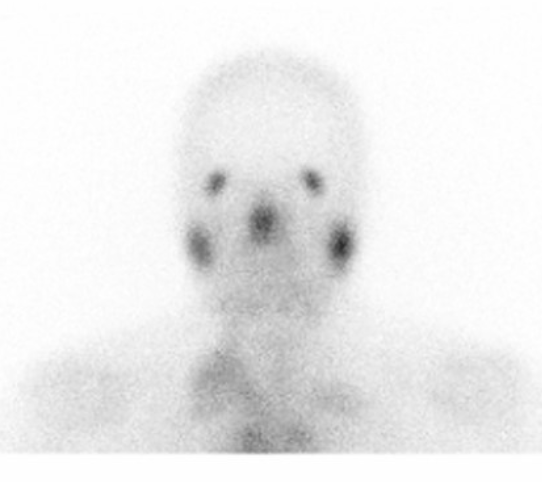
Panda sign to show sarcoid
Evaluation of spinal infection/osteomyelitis
Evaluation of pulmonary infection and/or inflammation —-> PCP
Diagnosis and follow up evaluation of retroperitoneal fibrosis
Evaluation of drug induced pulmonary toxicity/fibrosis (i.e. bleomycin, amiodarone use)
Sarcoid
Panda sign
Interstitial Lung Disease
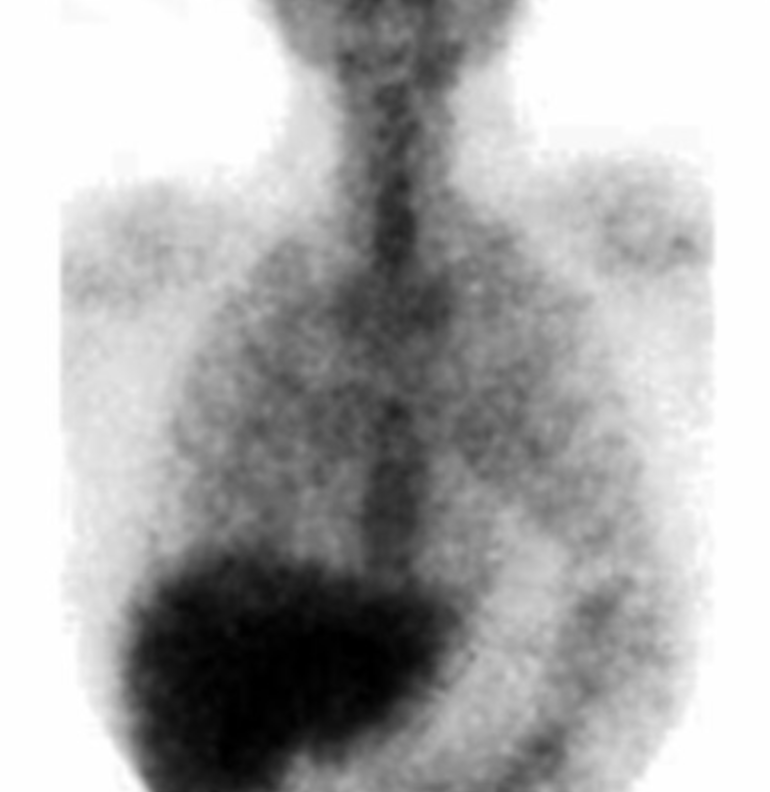
Grade 1 - < background < bone
Grade 2 - = bone (pic is grade 2)
Grade 3 - = liver
Grade 4 - > liver
References:
Gallium
4 peaks
93 keV
184 keV
300 keV
393 keV
Basically 100-200-300-400
Half life ~ 3 days
Decay by electron capture
Things that decay by electron capture = GIIT
Gallium, Indium, Iodine 123, Thallium
Poor man’s bone scan
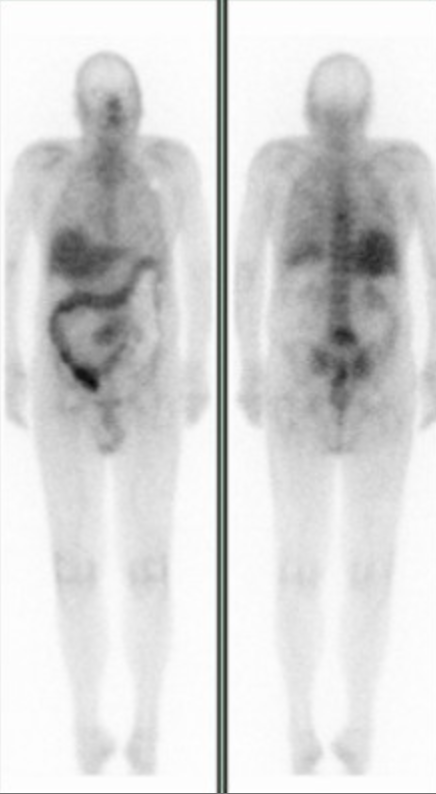
Normal uptake in
Liver
Kidneys early, but if see kidney after 24 hours = bad
Faint uptake in breasts
Lacrimal gland uptake
Some faint GI uptake
Indium (In-111 WBC scan)is therefore better if looking for abdominal or pelvic infections
Malignant otitis media
Hot on both Ga & Bone scan
Spinal osteomyelitis
Ga is better than In for spine infections
Buzzwords
Ga + AA = sarcoid
Ga + AIDS = PCP
Ga + Spine = osteomyelitis
Ga + faint bilateral breast uptake = normal
Ga + intense unilateral breast uptake = bad
Ga vs Thallium
PCP = Ga hot & Th cold
Lymphoma = Ga cold & Th hot
Normal Study
Interstitial Lung Disease
Interstitial Lung Disease