Head & Neck Masses
Choleosteatoma
Basically ball of keratin similar to epidermoid cyst
Can erode into bone, typically temporal bone - caution for tympanic membrane perforation
Broadly grouped based on acquired (98%) or congenital (2%)
Acquired choleosteatomas
Two major types of acquired
Pars flaccida
Expands into prussak space
Displace the ossicles medially
Pars tensa
Displaces ossicles laterally
T1 hypointense, T2 hyperintense, non-enhancing, will restrict diffusion
Usually seen near mastoid air cells and tympanic membrane
Cholesterol Granuloma
Aka blue dome cyts, chocolate cyst of ear
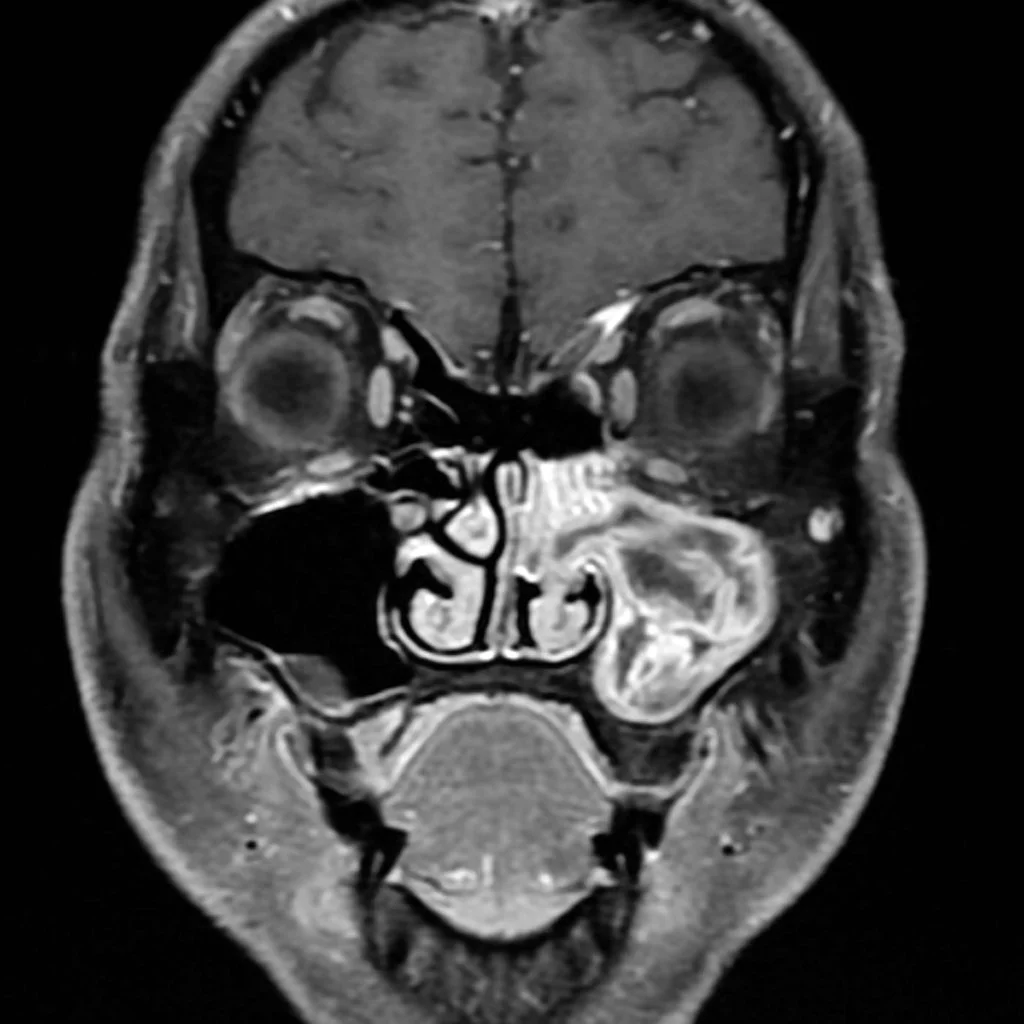
Inverted Papilloma
Non-cancerous sinonasal mass that rarely has malignant transformation
Presentation/Imaging
Typically middle aged men
Lateral wall of nasal cavity most commonly
Bony remodeling
Convoluted cerebriform pattern (alternating stripes of high and low intensity on MR)
T1: Isointense to muscle, heterogenous enhancement
T2: hyperintense to muscle
Carotid body paraganglioma
Hypervascular mass in carotid space which splays the internal and external carotid arteries
Early washout
May have salt/pepper on MR
Salt = increased signal from hemorrhages (not a common finding)
Pepper = flow voids from vascularity - serpentine or punctate flow voids
Hypoechoic and vascular on US
Unilateral, may be bilateral in inherited syndromes
If multiple look for:
VHL
MEN-2A
NF-1
Paraganglioma syndromes
DDx
RCC mets - although these will not be symmetric and typically not in carotid space
Hemangiopericytoma - very rare, these will be a singular mass
Schwannoma - these will not splay the carotid arteries, less dense and less enhancement than paraganglioma
Shamblin grading system - who cares
Tx - cut it out
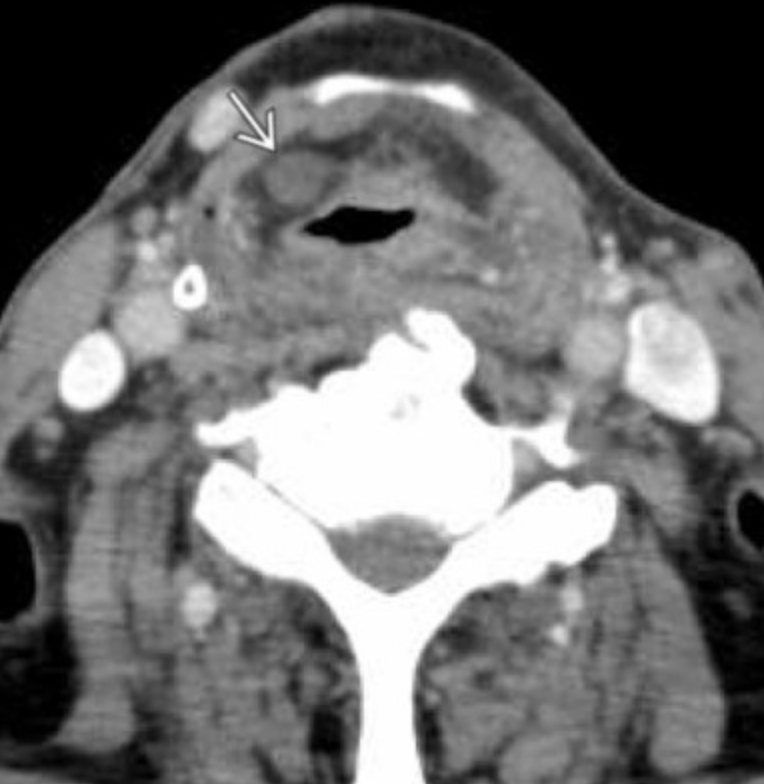
Thyroglossal duct cyst
Midline neck cyst
Can occur anywhere at midline from base of tongue to thyroid gland
Thyroglossal duct is basically a highway for thyroid gland to follow
Starts at foramen cecum —> anterior to hyoid —> moves under hyoid bone in pre-epiglottic space —> deep to strap muscles
Should normally go away in 5/6th weeks gestation
If persists then cysts can form due to persistent secretion from epithelial cells of the remaining duct
Bronchogenic Cyst
Classically in the sub-carina mediastinum
Esophageal Duplication cysts
Mediastinal cyst that is contiguous with the esophagus
Tornwaldt Cyst
Benign cyst in mucosal space, remnant of notochord tissue
T1- variable
T2 - hyperintense
Does not enhance
Typically no treatment needed
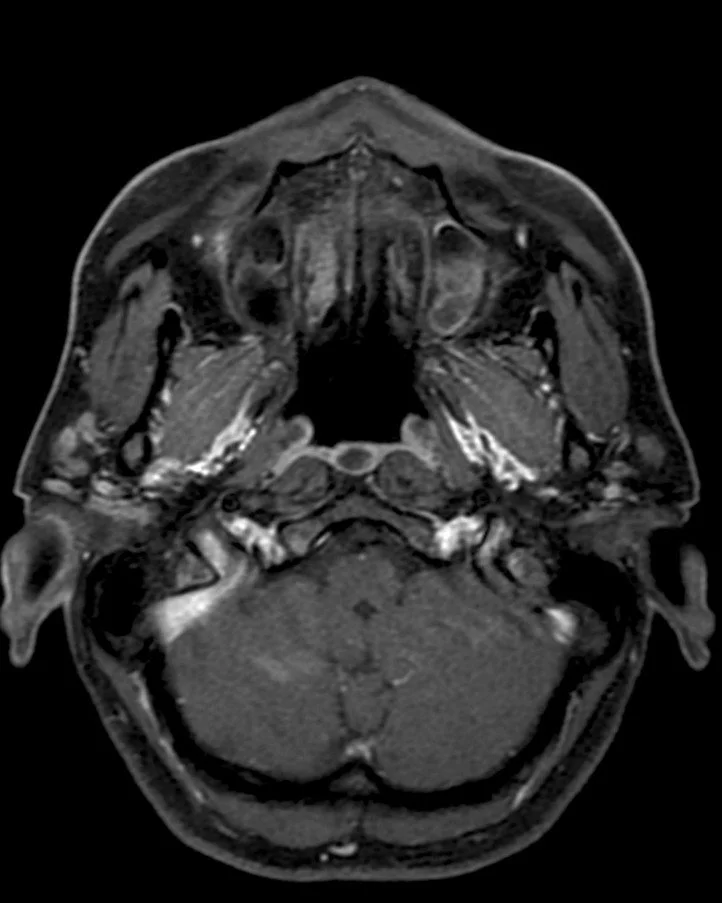
Sinus Lesion with Osseous Erosions
Squamous cell carinoma
Fungal sinusitis
Enthesioneuroblastoma
Non-Hodgkin lymphoma
Most common
Squamous cell carinoma
Fungal sinusitis
Enthesioneuroblastoma
Non-Hodgkin lymphoma
Squamous Cell Carcinoma
Most commonly arises from maxillary antrum
Necrosis & hemorrhage
Less common
Wegeners
Adenocarcinoma (sinus)
Sarcoidosis
Rhabdomyosarcoma
Adenoid cystic carcinoma
Undifferentiated sinonasal carcinoma
Fungal Sinusitis
Immunocompromised
Aspergillus & Mucormycosis
Sinus Lesion No Osseous Destruction
Antrochoanal Polyp
Juvenile Nasopharyngeal Angiofibroma
Arise from the sphenopalatine fossa
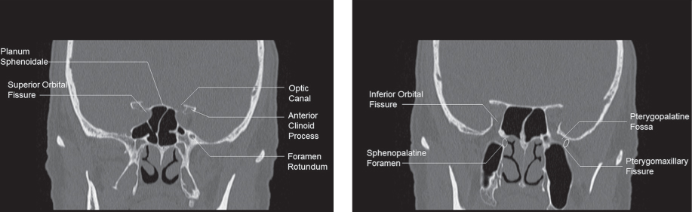
Laryngocele
Unilateral, thin walled fluid (or air) collections in paraglottic space
Paraglottic space is basically anterior and lateral to pharynx/larynx
If infected —>pyolaryngocele
Secondary laryngocele
There is another obstructive lesion inferiorly which causes laryngeal obstruction and formation of a laryngocele superior to the obstructive lesion
Obstructive lesion may be SCC so be sure to look for this if you see a laryngocele
Branchial Cleft Cyst
Lateral neck cyst
Type 2 = most common
Make sure this is not a necrotic node - could be malignancy
Adenocarcinoma
Can arise from ethmoid sinuses
Rare
Osteosarcoma
Chondrosarcoma
Langerhans histiocytosis
Metastasis
Enthesioneuroblastoma
Age peaks: 11-20 yo & 50-60 yo
Aspergillus & Mucormycosis
References:
Case courtesy of Frank Gaillard, Radiopaedia.org, rID: 9399 (inverted papilloma)