Female Genitourinary
Ovarian Malignancy
CT A&P is preferred first test for staging
MRI is degraded by bowel peristalsis motion and therefore is not preferred
PET for follow up but not for initial
General
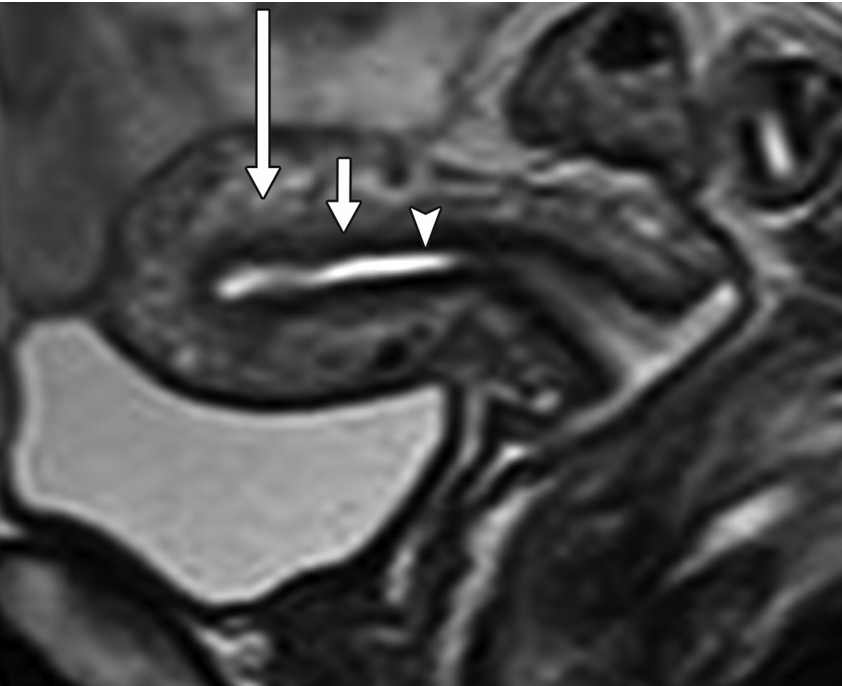
Junctional zone
Arrow head = endometrium
Middle arrow = junctional zone
Long arrow = Outer myometrium
Mullerian Duct Anomalies
Can think of these as failure of the septum to resorb or failure of mullerian ducts to fuse
Agenesis
Always need to look at kidneys & GU system for additional abnormalities
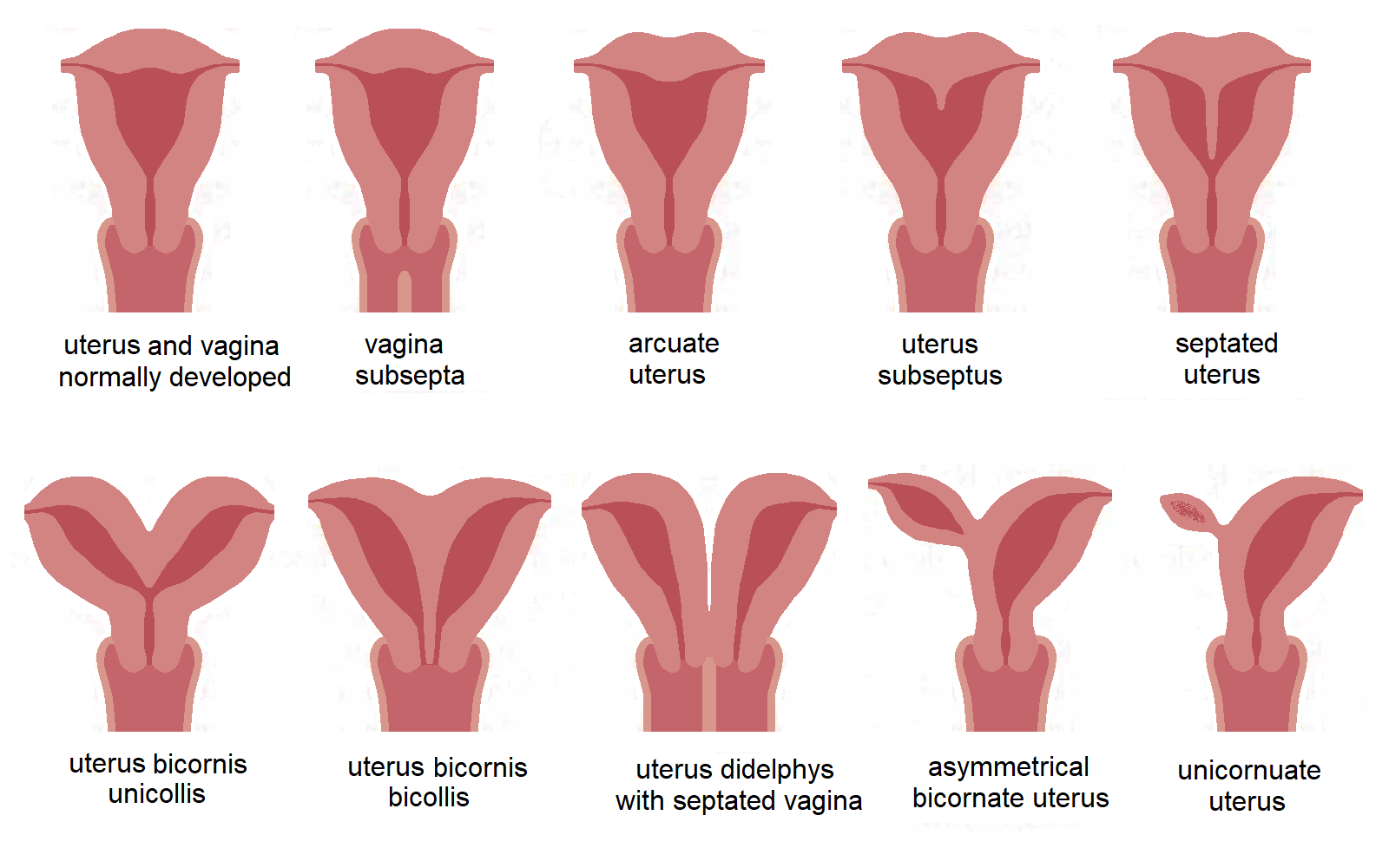
Agenesis
Uterus doesn’t form basically because of interruption of mullerian duct early in development
Complete
No uterus, cervix or vagina
Partial
Has any part of the uterus, cervix or vagina present but everything
Ovaries are fine - can have a surrogate pregnancy
DES Exposure
Results in a T Shaped uterus
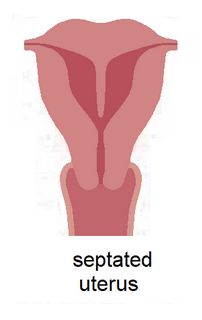
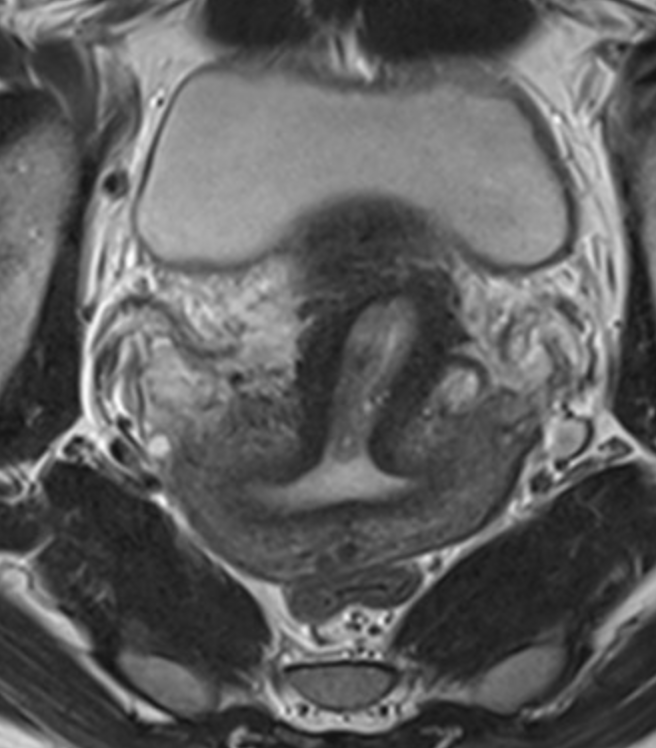
Septate Uterus
Failure of septum to resorb
No indentation at top of uterus (normal contour)
Look at T2 images to see if there is a fibrous or muscular septum - helps surgery
T2 dark = fibrous
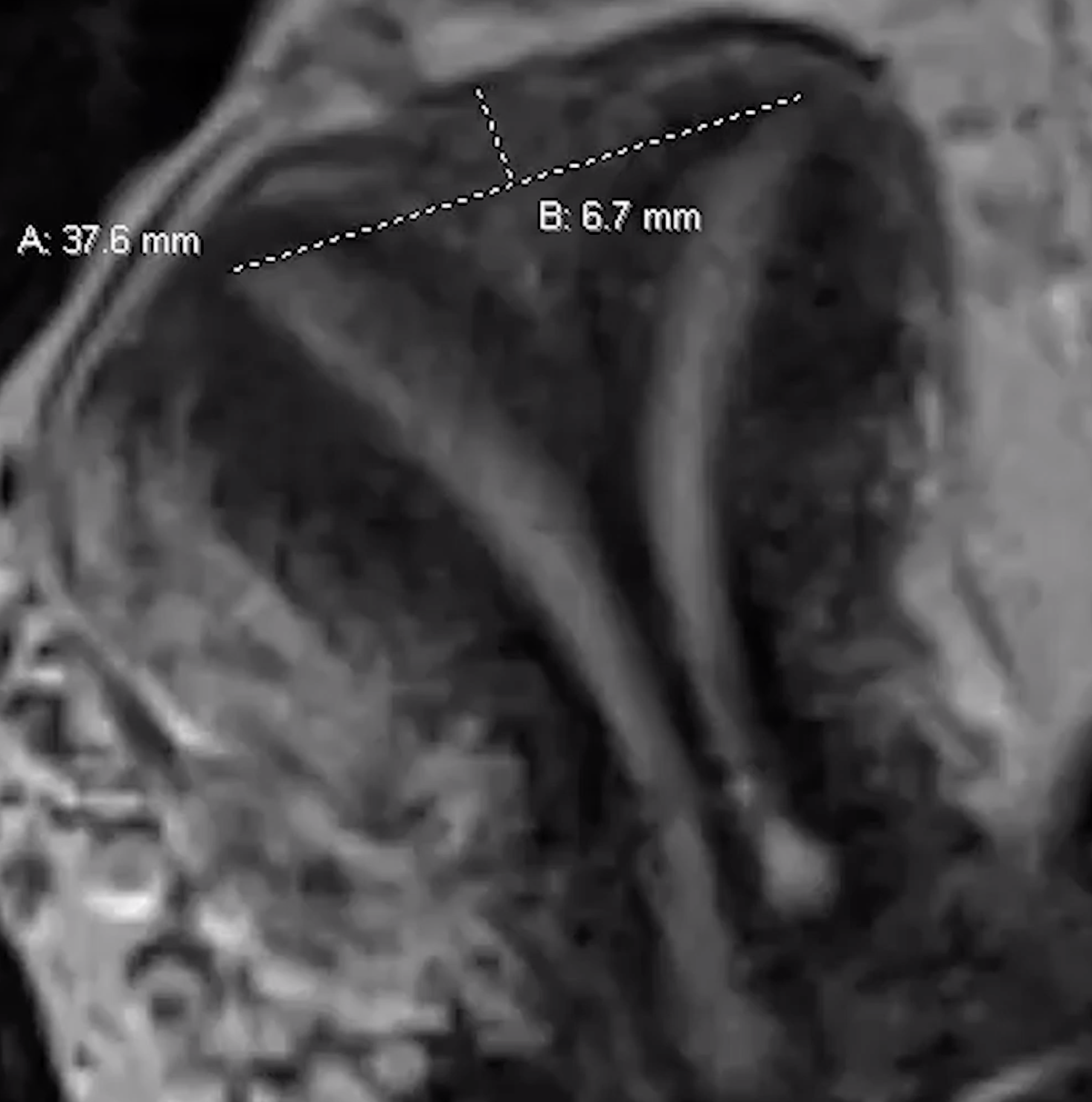
Should also measure the septum
Septate line
Drawn line across top of two tips (inter-cornuate line) and another from that line to the fundus
Needs to be > 5mm to be a septate uterus
Adenomyosis
Ectopic endometrial glands in the myometrium
Technically myometrial glands 2.5 mm deep to the endometrial-myometrium interface
Findings
Ectopic endometrial glands
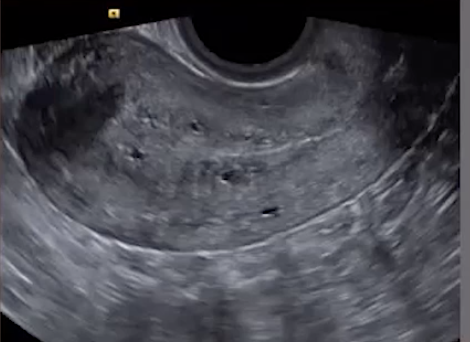
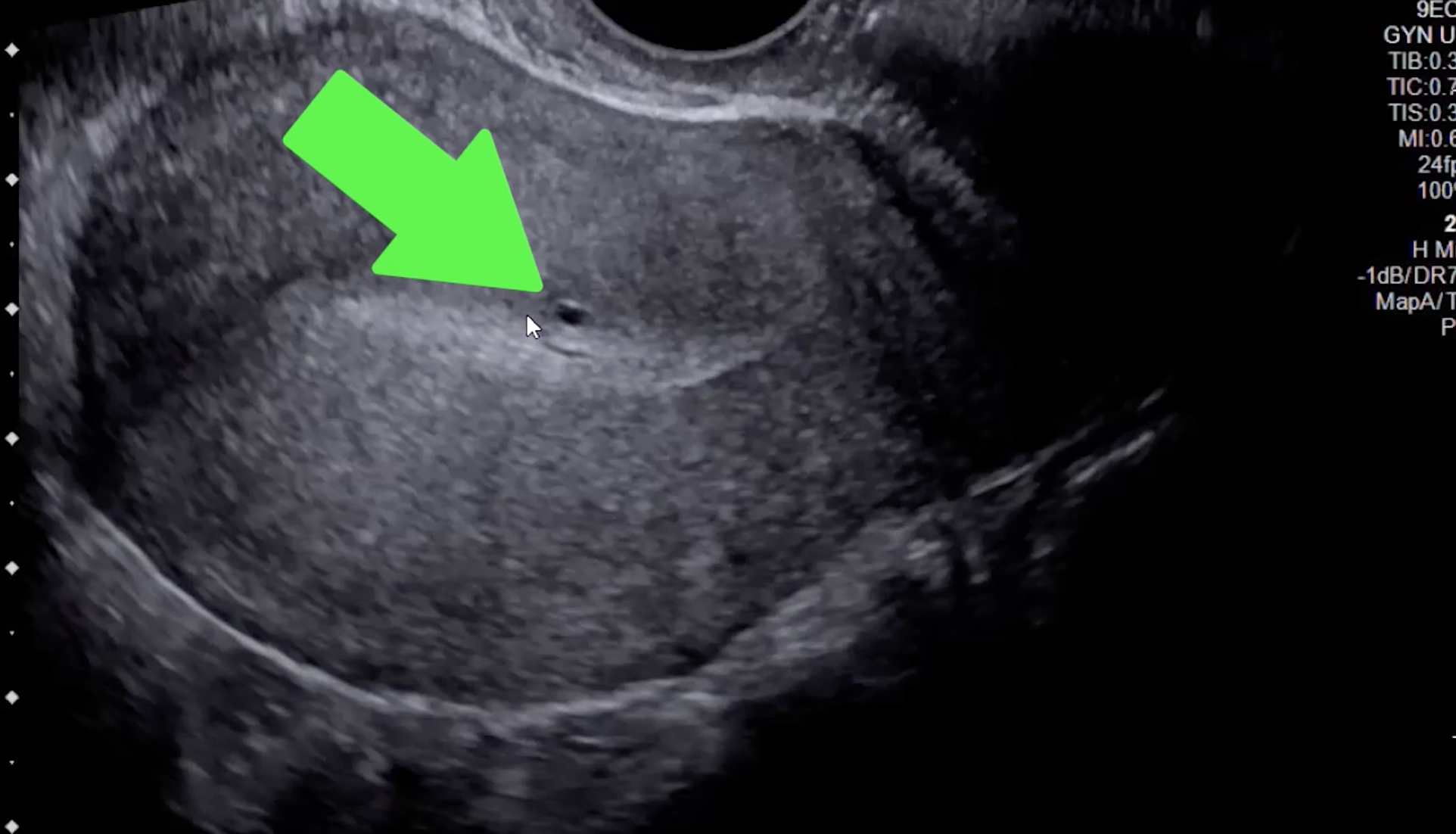
Echogenic nodules/striations or small cysts (US to R)
Small cysts at the endometrial-myometrial junction are most sensitive & specific finding for adenomyosis (green arrow)
Hypertrophy of myometrium
Junctional zone thickness >12 mm
Not required but high specificity
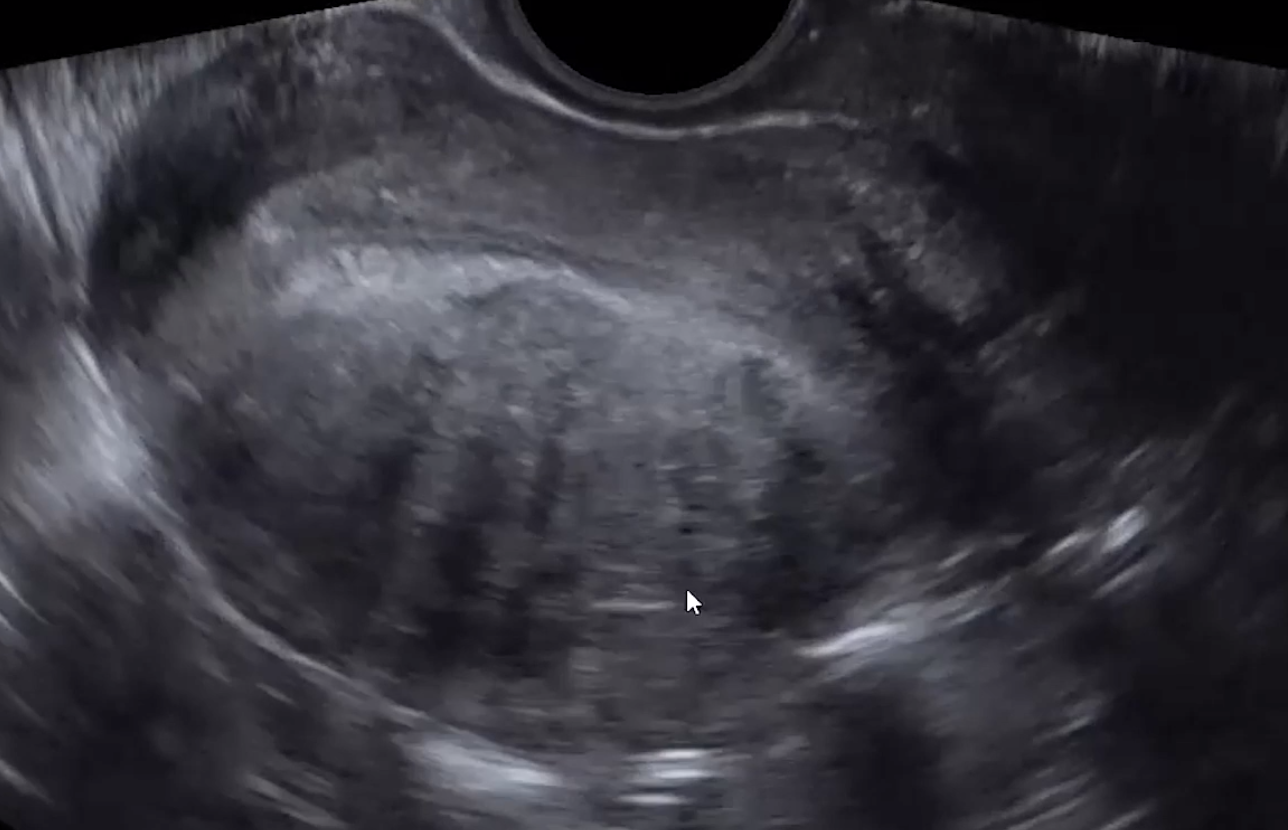
Venetian blinds appearance
Alternating stripes of increased and decreased echogenicity - looks like light coming through the blinds to me (bottom image)
Need to make sure the lines don’t go back to the arcuate arteries within the uterus itself, that’s just artifact
Ill defined endometrial-myometrial junction
Vascularity
Tortuous and increased vascularity
Specific to MR
Thick junctional zone with indistinct margins
T2 bright foci in endometrial & myometrium (sometimes T1 bright too)
This is how you differentiate it from a fibroid
Adenomyoma
Basically adenomyosis in mass form
Leiomyosarcoma
Look for an enlarging uterine mass/uterus with internal areas of hemorrhage/necrosis
May look largely cystic with blood and shit in there
Look for mets
If none seen, should include degenerative/degenerating fibroid in ddx
Uterine AV malformation
Basically AV fistula in uterus
Risk factors
Trauma (curettage included)
Intrauterine contraception use
Treatment of prior trophoblastic disease
Pelvic Actinomycosis
Life threatening infection
Associated with IUD use (also surgery, trauma)
Falls under the umbrella of PID
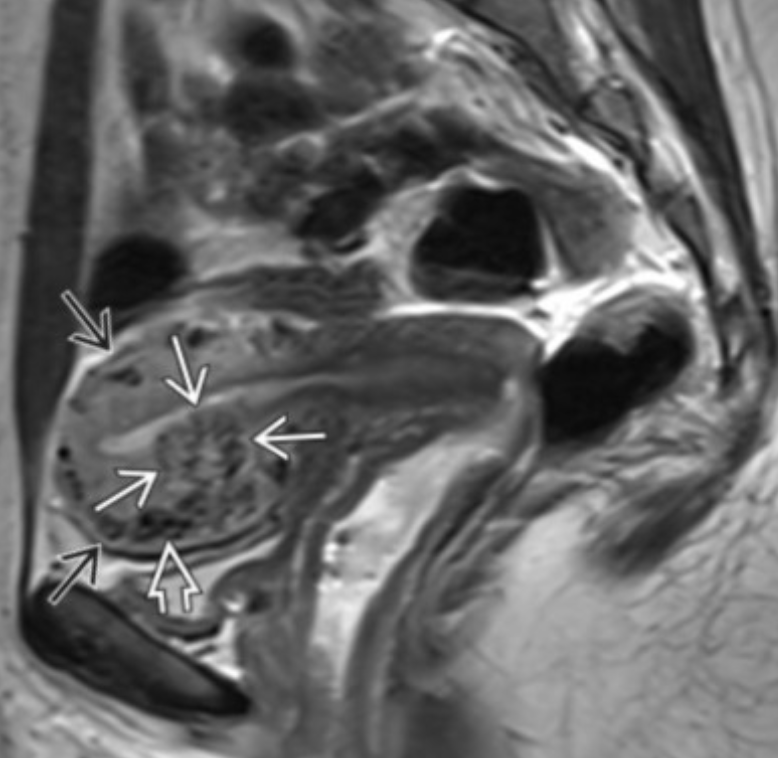
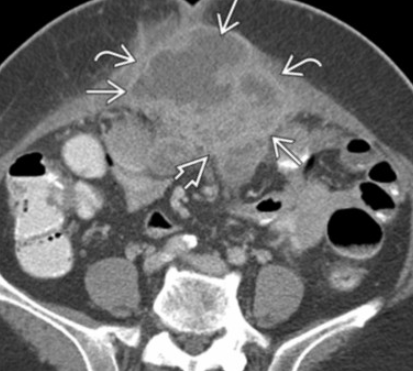
Looks like really bad loculated abscess
Multiseptated fluid containing mass with enhancing walls and septa
OHVIRA Syndrome
Obstructed Hemivagina
Ipsilateral renal anomaly
So
Duplicated vagina, cervix, uterus
Renal anomly
Hematocolpos
Endometrial Polyp
Really can’t tell difference from cancer and they get biopsied anyway
Findings more suggestive of polyp over cancer
Pedunculated
T2 hypointense core
Lacy enhancement
d
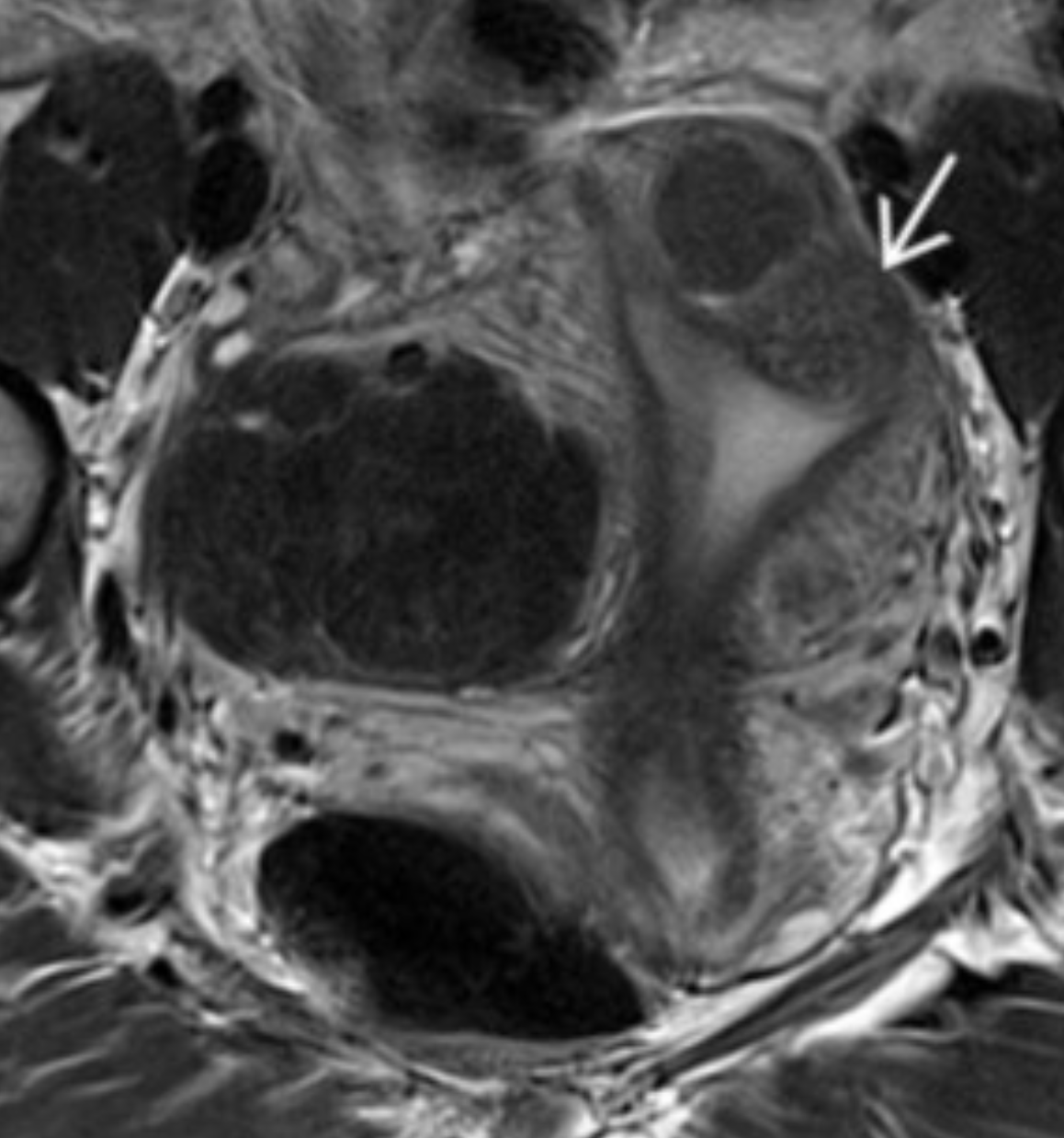
Uterus
Rudimentary horn
Basically a little uterus next to the main uterus
May communicate with regular uterus or not
Caused by incomplete development of one of the mullerian ducts (the rudimentary horn) while the other duct forms normally (regular uterus)
Main uterus may be smaller than usual
Increased risk of preterm labor
Increased risk of IUGR (smaller uterus so smaller area for baby to grow)
Need to evaluate if the rudimentary horn has its own endometrial lining
Increased risk of ectopic if endometrium is present
Need to cut it out
Increased risk of
Uterine rupture
Miscarriage
GU anomaly will typically be on same side as the rudimentary horn
Uterine Disease
Endometrium
Endometrial disease can be divided into the categories as below
Endometrial disease
Diffuse disease
Endometritis
Iatrogenic hyertrophy (estrogem, tamoxifen use)
Cancer
Stimulation from obesity, PCOS, etc
Focal disease
Adhesions/synechiae
h
j
Tamoxifen Use
Causes multiple changes of the endometrium
Endometrial hypertrophy
On tamoxifen endometrium allowed to be 0.9 mm thick
But if bleeding —> need scope regardless
Cystic changes, polyps etc
Increased risk of endometrial carcinoma
Uterine Synechiae/Adhesions
Linear and extend from one uterine wall to another
Enhance
T2 hypointense (scar tissue so…)
Asherman syndrome
Endometrial Cancer
Adenocarcinoma (80%)
Serous Papillary (5-10%)
Old women w/ atrophic endometrium
Clear Cell Carcinoma
Mucinous Adenocarcinoma
Squamous Cell
Lymph nodes
Nodes as small as 4mm or larger in short axis in the pelvis are considered significant
s
Fibroids
Endometriosis
Honestly this just looks like dark fuck shit, sometimes circumscribed, sometimes ill defined or spiculated, abuts other structures, can tether shit
Superficial endometriosis = Sampson syndrome
Plaques along the superficial portion of the peritoneum lining the ovaries, ligaments, basically everything in pelvis
These are the gun powder burn lesions
Typically cannot see these on imaging unless they cause hemorrhage (look for T1 bright)
Deep Endometriosis = Cullen syndrome
These are subperitoneal implants
Ectopic endometrial glands embedded in fibrous stroma and smooth muscle cells
Increased risk for
Endometriod cancers
Clear cell carcinoma
Hematosalpinx
If you see this need to look closely for small endometrial deposits outside the uterus because it is almost pathognomonic for endometriosis
Torus Uterinus
This is where the sacrouterine ligament attaches
Commonly site for endometrial implant
Kissing ovary sign
Unexpected ureter kinking or hydronephrosis
Endometrioma
When endometriosis implants on the ovary invaginate and create a mass
Blood made each cycle cannot escape and accumulates
Thick walled with low level internal echos on US
Low T2 signal (shading sign) - can be high signal or whatever too but low is the classic
Us fat sat to differentiate for teratoma
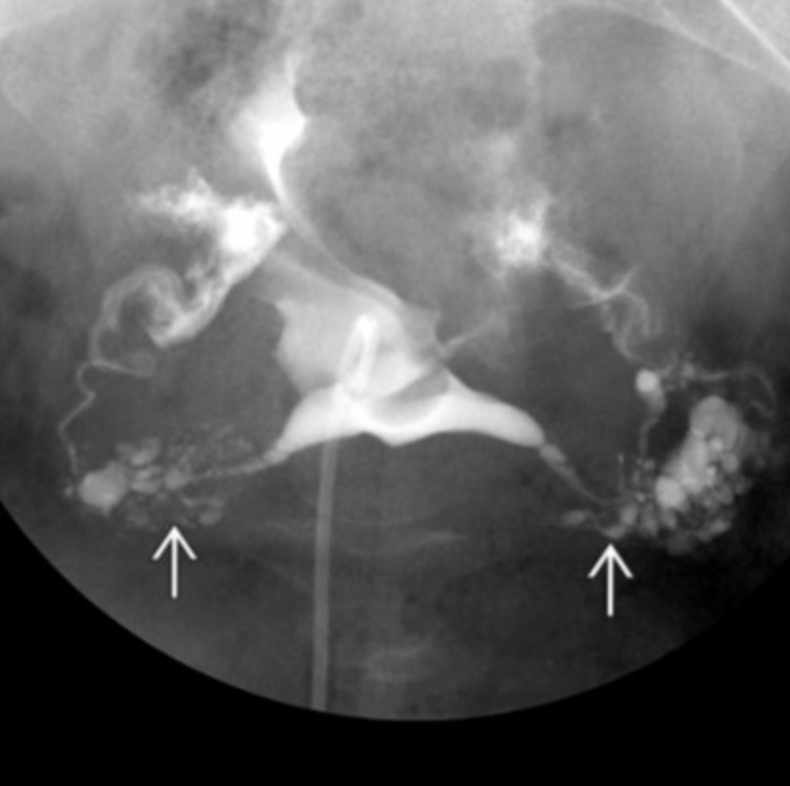
Salpingitis isthmica nodosa
Basically nodularity/diverticula of the fallopian tubes
Risk for ectopic pregnancy
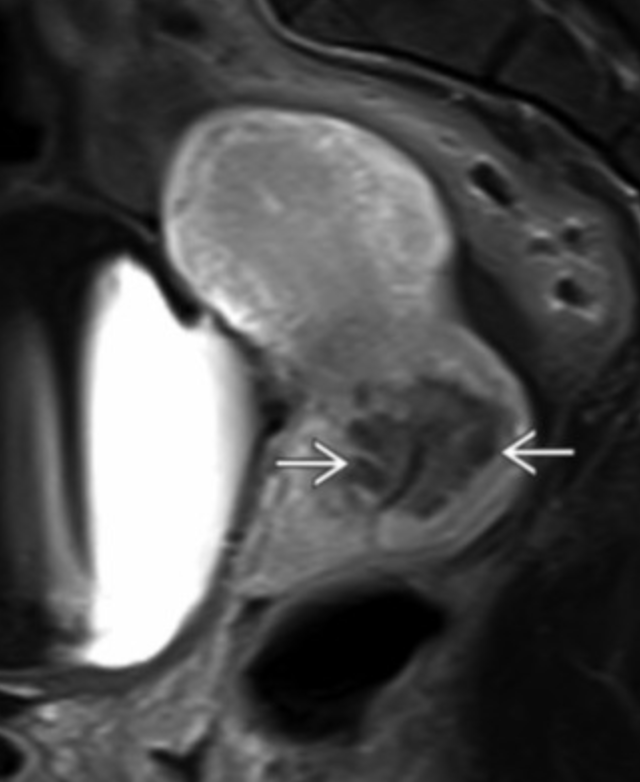
Cervical glandular hyperplasia
Located along the inner aspect of the tissue (surrounding the canal)
Should not extend to the superficial surface
Well Defined
Random Uterine Pathology
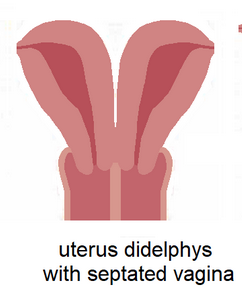
Uterine Didelphys
Bother mullerian ducts form but they don’t fuse together
Two horns, two cervix
Look for a hemi-vagina if you see didelphys
High vaginal septum (70% of cases)
wall of tissue blocking flow which results in back up of period blood
Pain
Patient comes to ED
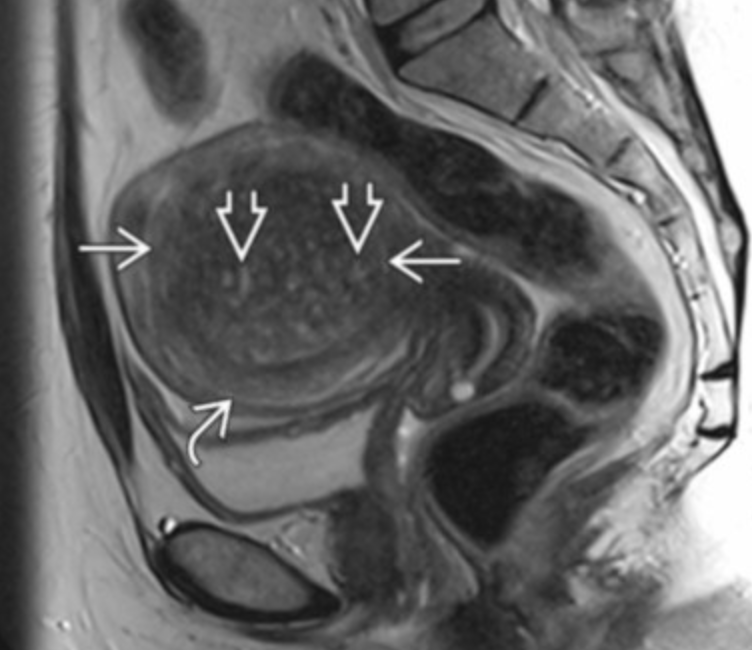
Uterine Fibroids
Exist on a spectrum of benign to non-benign (but not necessarily malignant)
Benign
Non-Degenerated
Degenerated
Degeneration types
Mxyoid
Cystic
Hemorrhagic
Fatty
Hyaline
Non-Benign
Mitotically active, increased cellularity, Atypical appearance
STUMP (small muscle tumor of
Malignant sarcoma
Imaging Findings
US
Well circumscribed
Hypoechoic
Calcs which may have shadowing
May have increased vascularity
Really just looks like a heterogenous crock of shit
MRI
Classically T1 isointense to myometrium, T2 hypointense
T2 hypo-intensity should make you think of fibrous tissue, the most common of which is a fibroid
Areas of internal T1 hyperintensity —> consider hemorrhagic component/degen
The internal T1 hyperintensity looks slightly T1 hypointense tbh, not actually very T1 dark but bright relative to myometrium I suppose
Enhance
Some variation though
May have increased calcifications after necrosis or with increased (post-menopausal) age
Location
Submucosal
Intramural
Subserosal
Pedunculated (can torse and cause acute pain)
Others
Red fibroid
Basically acutely infarcted and hemorrhagic fibroid
T1 hyperintense (again not dramatic but kinda brighter than the myometrium)
Look at subtracted images because if already T1 bright internally then will be bright on post-contrast too because its already bright on the T1, so look at subtracted images and if looks like black hole (all dark inside) then likely red fibroid
Lipomyomyoma
Basically a fat fibroid
Bright mass on US
Look for no shadowing, if bright mass and shadows can be air or calcified fibroid
If fallopian tube fibroid
Should be in between the uterus and ovary
Need to look for a normal ipsilateral ovary otherwise a fibrous tumor of the ovary (fibroma) is in the ddx
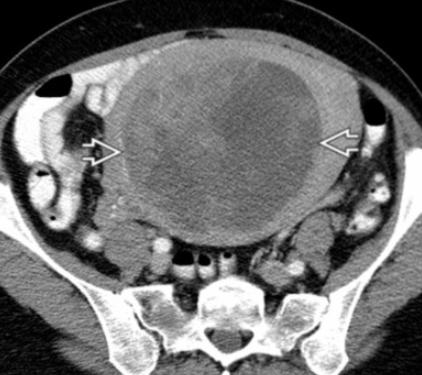
Nabothian Cyst
Cysts
Garter Duct Cyst
Upper vaginal cyst, usually anterior wall
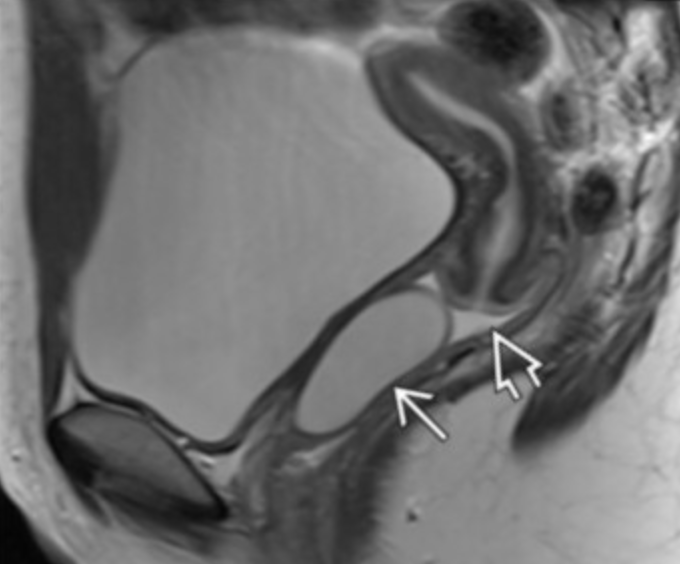
Cervix
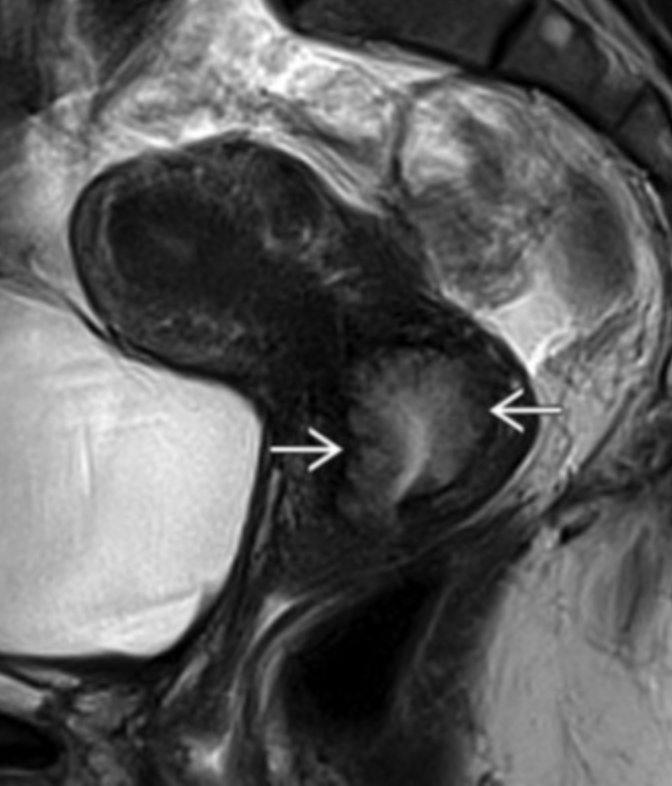
Adenoma Malignum
Solid and cystic mass
References: